The collector.
A collection with a point of view.
For the person who remembers where they first heard a track. Discovery becomes a collection; a collection becomes an expression of taste. Music carries a story, an artist and a reason to come back.

For the love.
For the people.
For what comes next.

01 / THE FEELING
That moment when a song becomes part of your life. FanFactors begins there.
02 / THE IDEA
What if the people who discover, collect and champion music could build a livelihood around the music they love?
That is the ambition behind FanFactors. A music marketplace connecting artists, collectors and communities, with discovery, digital licensing and resale journeys woven into one platform. A place where enthusiasm can become participation—and where the fan has a role in the story.

03 / THE PEOPLE
A track becomes a recommendation. A recommendation becomes a conversation. A conversation becomes a community.
The collector.
For the person who remembers where they first heard a track. Discovery becomes a collection; a collection becomes an expression of taste. Music carries a story, an artist and a reason to come back.
The champion.
For the friend who introduces everyone to the next artist they love. Sharing is more than sending a link: it is context, enthusiasm and trust. The ambition is to give that contribution a place in the music economy.
The artist.
For independent artists building a world around their sound. A profile, a release and a community should belong to the same experience. The people who care about the music help it travel further.
Audience perspectives express the product vision; they are not user testimonials.
04 / THE EXPERIENCE
The music is the invitation.
The experience keeps you there.
The creative direction brings catalogue, identity and community into the same visual world. Rich artwork draws you in. Clear hierarchy helps you move. The interface makes room for both the track and the people around it.
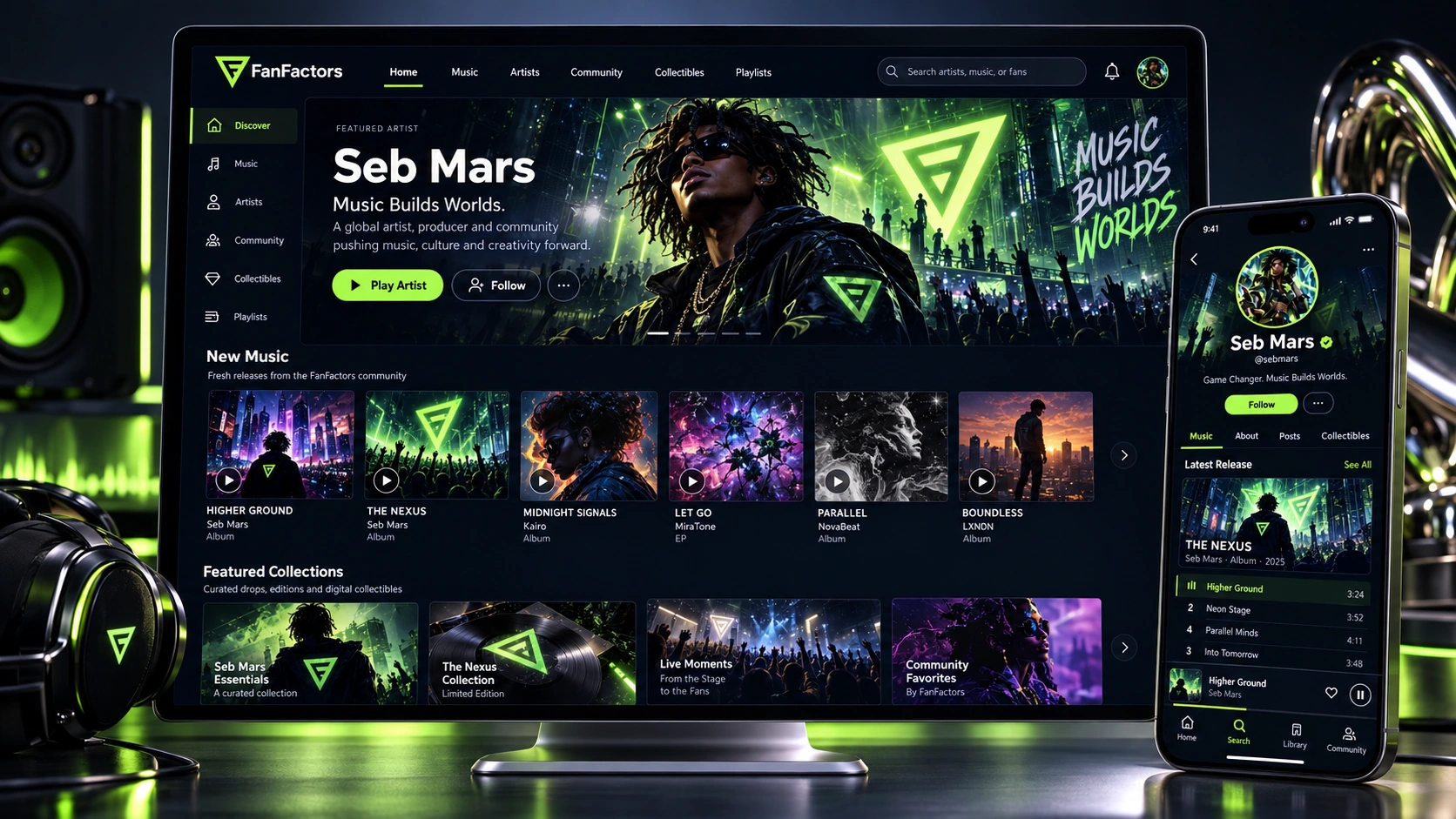
Follow curiosity. Find an artist, explore a release, hear something worth keeping.
Build a library that reflects your taste, with the music and its licensing context close together.
Share the music you believe in and bring your community into the story.
Return to the artist, the conversation and the next discovery.
05 / INSIDE THE PLATFORM
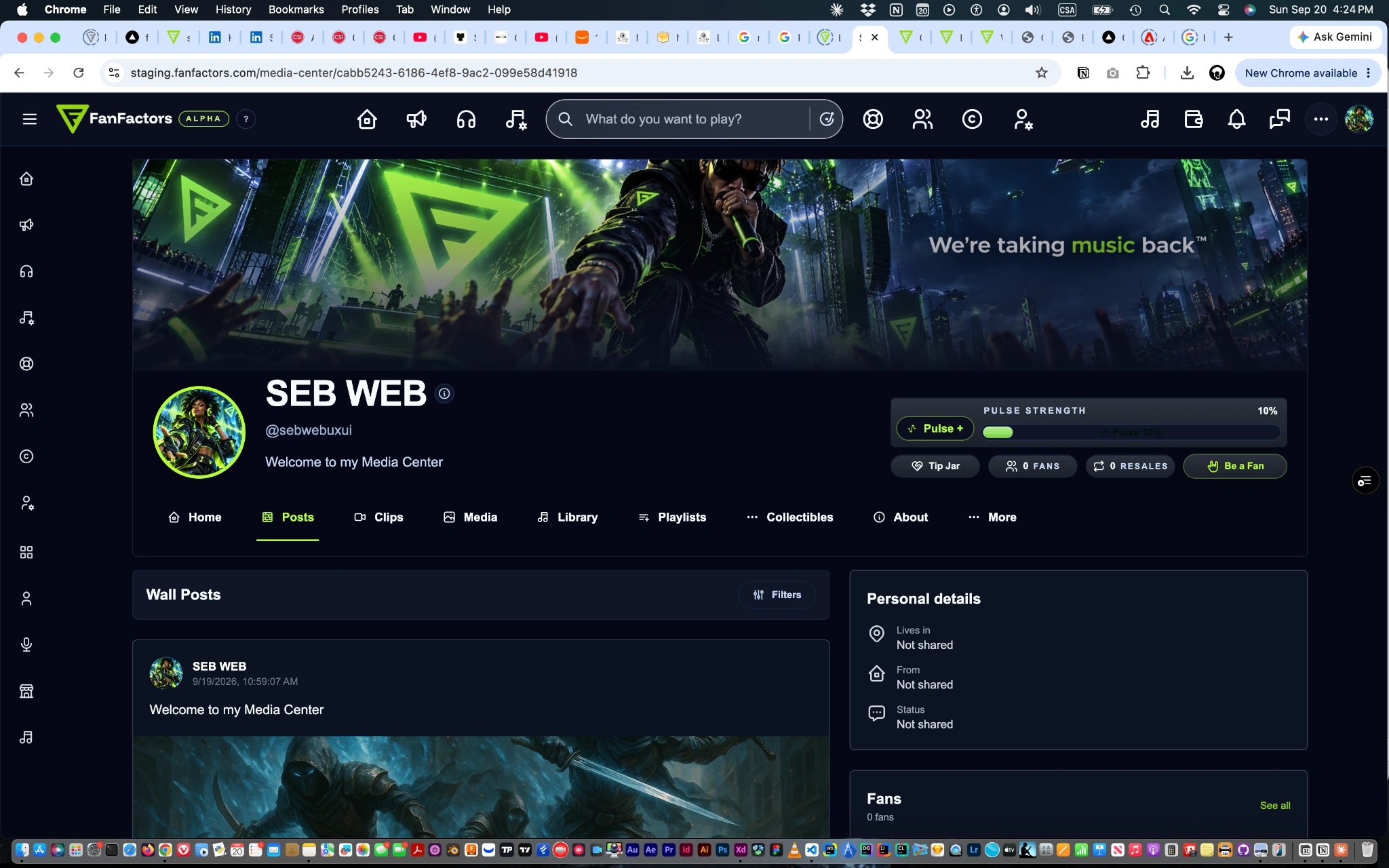
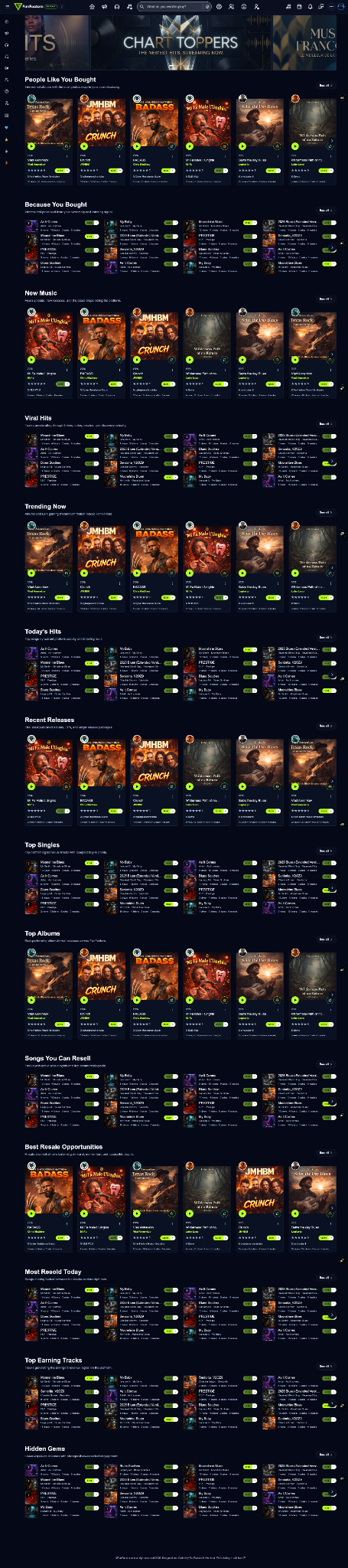
A closer look at the supplied platform captures and interface design. Open a view to explore it at full size.
06 / PARTICIPATION
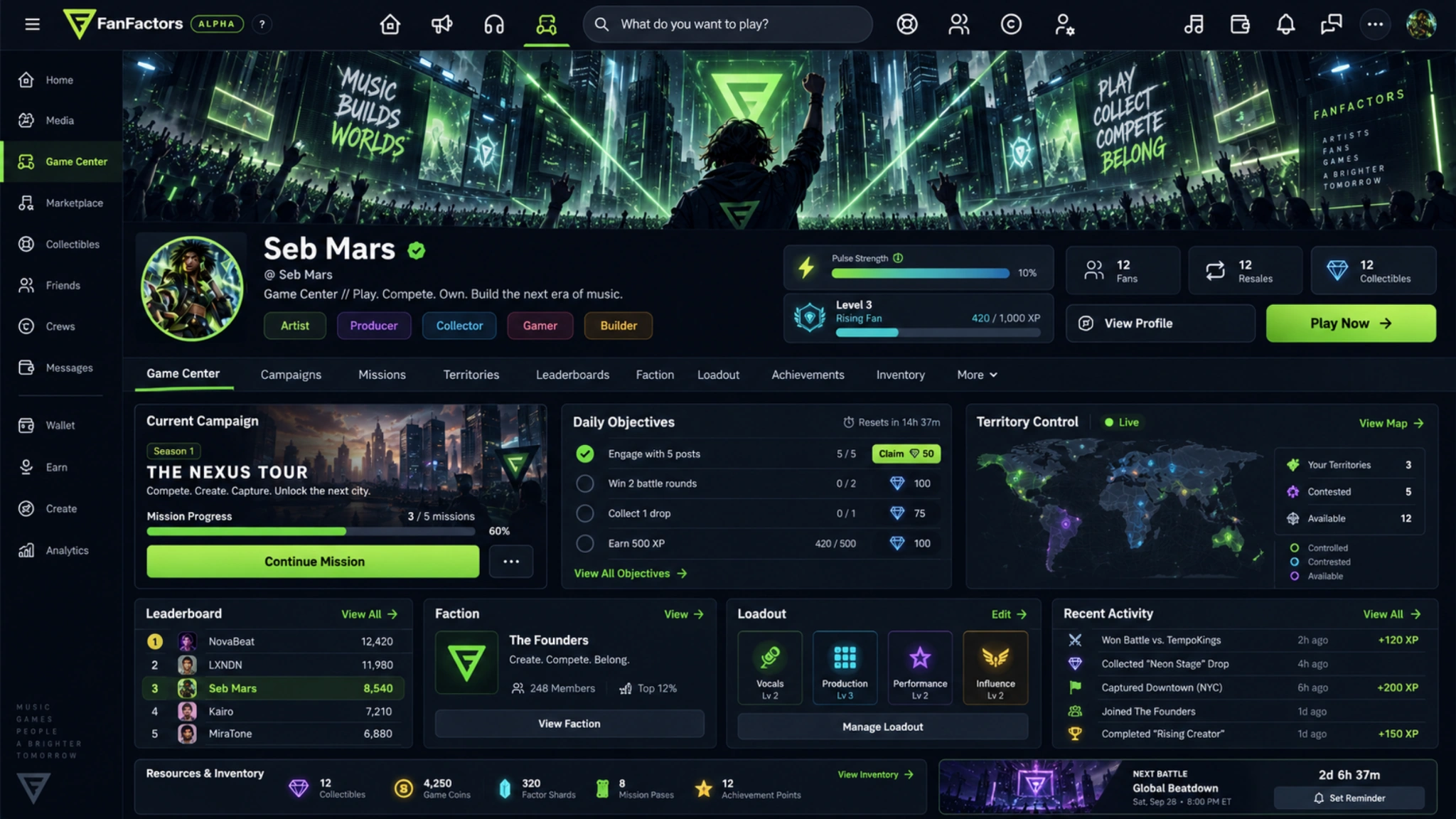
The Game Center explores another layer of the FanFactors world: missions, progression and community. Its interface design connects participation with a sense of place—an invitation to take part in something larger than a listening session.
07 / THE VISUAL LANGUAGE
Music.
People.
Possibility.
Midnight surfaces let music artwork lead. Electric lime creates a recognisable pulse. Generous type gives the product a voice, while quieter labels keep navigation and context readable.
08 / THE BUILD
Sébastien Marchi built FanFactors over ten months by directing AI agents as a software engineering team. The concept, the original prototype, UX/UI and creative direction came from him. AI expanded what he could execute.
Before AI entered the workflow, the platform already existed as a complete HTML, CSS and JavaScript mockup. Screens, structure and intended journeys gave the engineering work a concrete starting point.
Sébastien translated the product into engineering tasks, supplied context and constraints, and directed AI agents as a software engineering team. The decisions stayed connected to one product vision.
The work required examining results, correcting gaps and refining the experience. AI increased execution capacity; the founder remained responsible for product choices, UX/UI and creative direction.
09 / THE SCALE
His estimate for a conventional project of comparable scope:
10 software engineers
2 UX/UI designers
30 months of development
Estimated budget
Conventional-project figures are the founder’s estimates, not an independently audited comparison. Actual FanFactors expenditure has not been disclosed.
CASE STUDY · HUMAN VISION, AI EXECUTION
Sébastien Marchi built FanFactors over ten months by directing AI agents as a software engineering team. He brought the platform concept, the UX/UI and an existing HTML, CSS and JavaScript mockup. AI expanded his capacity to turn that work into a functioning product.
Before using AI for development, Sébastien had created a complete platform mockup in HTML, CSS and JavaScript. The structure, screens and intended experience were already expressed in code. That prototype became a concrete reference for the agents: a product to implement, with a visual language and journeys to preserve.
Establish the marketplace model, user journeys and expected behaviour. Use the existing mockup to make the intended experience explicit.
Break the work into engineering tasks, give the agents context and constraints, and coordinate their contributions around the same product.
Examine the results, correct gaps and refine implementation. The founder keeps responsibility for decisions as the product takes shape.
Sébastien estimates that a conventional build of comparable scope would have required ten software engineers, two UX/UI designers, two and a half years and an $8 million budget. His account: ten months working as a solo founder, directing AI agents.
| Dimension | Conventional build · founder’s estimate | FanFactors · founder’s account |
|---|---|---|
| Human team | 10 software engineers + 2 UX/UI designers | 1 founder directing AI agents |
| Development time | 2.5 years / 30 months | 10 months |
| Budget | $8 million estimated | Actual expenditure not disclosed |
Comparison based on the founder’s account and his estimates for a conventional project of comparable scope.
The result is FanFactors, a music marketplace connecting artists and fans through discovery, digital music licensing and resale journeys. Bringing a platform together means connecting the experience people see with accounts, commerce rules, wallets and the logic behind each transaction. The achievement is the breadth of that product built under one person’s direction.
Product concept, UX/UI, creative direction and AI-agent direction: Sébastien Marchi. Software development: AI agents directed by the founder, with OpenAI tools contributing to the work.
10 / WHAT COMES NEXT
Don’t fight artificial intelligence.
Embrace what you can create with it.
FanFactors is a case for creative independence: one person bringing product thinking, design and direction together, with AI extending their ability to build. The technology matters because of the human ambition it makes possible.
Created and directed by Sébastien Marchi.
AI-assisted development, including OpenAI tools.